
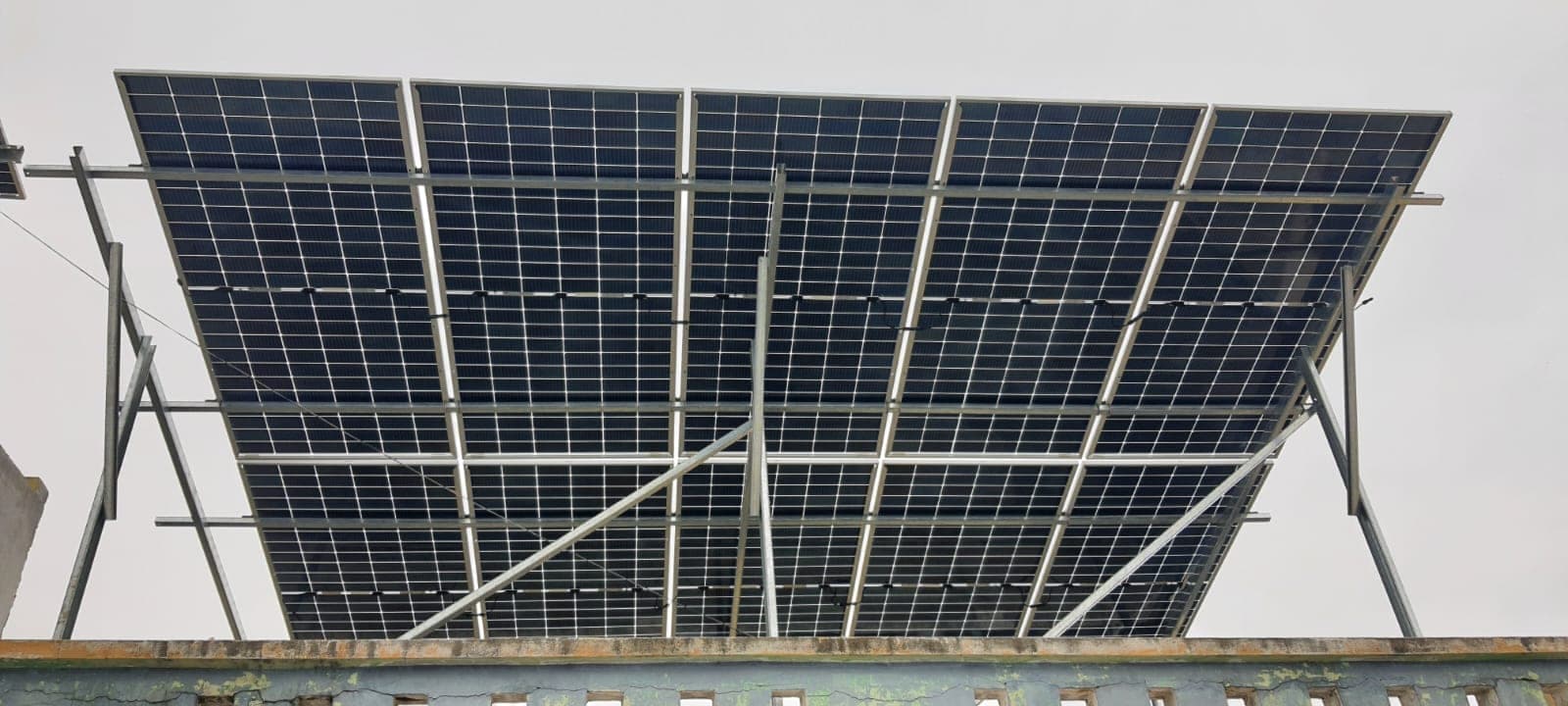
What a society system powers
Common-area loads in Indore apartments and townships are daytime-heavy and predictable:
| Load | Typical share of a common bill |
|---|---|
| Lifts | High |
| Water pumps and borewells | High |
| Corridor, parking and street lighting | Medium |
| Clubhouse, gym, security cabins | Medium |
| EV charging in common parking | Growing |
A rooftop system on the society's own building feeds the common meter, cutting maintenance charges for every flat.
Subsidy for housing societies
Under PM Surya Ghar, registered Group Housing Societies / Resident Welfare Associations receive ₹18,000 per kW for rooftop systems serving common facilities, including EV charging, up to 500 kW (calculated at up to 3 kW per house). DCR modules and a registered vendor are required.
Two example societies
| Item | 20 kW society | 50 kW township |
|---|---|---|
| Generation | ~29,180 units/yr | ~72,950 units/yr |
| Price before subsidy | ₹9 lakh – ₹10.4 lakh | ₹22.5 lakh – ₹26 lakh |
| Subsidy (₹18,000/kW) | ₹3,60,000 | ₹9,00,000 |
| Savings, year 1 | ~₹2.19 lakh | ~₹5.47 lakh |
| Payback | ~2.7 years | ~2.7 years |
How we work with committees
- Walkthrough with the committee — roof, common meter, load and bills.
- Proposal for the AGM — clear numbers, drawings and financing options, written for residents.
- Approvals — society resolution, DISCOM feasibility and subsidy registration.
- Installation scheduled around residents, with safe access and minimal disruption.
- Handover with a monitoring view the committee can share with residents.
Roof sharing and individual flats
Individual flat owners usually cannot put panels on the common roof alone. A society system for common loads is the cleanest option; some societies also allocate roof space to individual owners by resolution — we can design either way.